

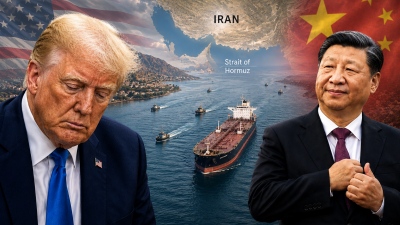
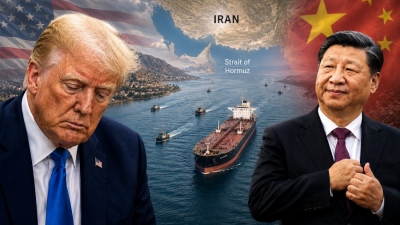
In an exceptionally high-stakes visit, US President Donald Trump is traveling to Beijing to confer with his Chinese counterpart, Xi Jinping, on a series of "hot-button issues." This meeting potentially represents a historic opportunity for the world’s two largest economies to redefine their trade relations and the tone of their mutual rivalry. However, Trump had imagined this trip quite differently...
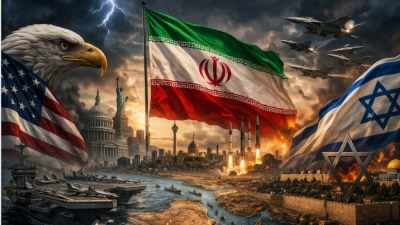
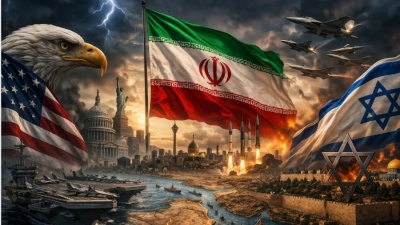
It is clear that following the humiliation the US has suffered from Iran in the Strait of Hormuz, the American president arrives in Beijing without holding strong cards. Trump projects the image of a weak leader... on one hand, as the head of a military superpower humbled by a lesser adversary, and on the other, as the leader of a party expected to suffer a major political blow in the upcoming midterm elections in November.
Conversely, Xi Jinping enters these talks from a clear position of strength. The Chinese president has managed to bolster China’s industrial and export power, transforming it into an autonomous technological superpower, while he remains the most powerful political figure, having consolidated his hold on power... far beyond the country’s traditional term limits. Analysts report that Xi Jinping has a unique opportunity under these circumstances to set the rules, seeking proposals, solutions, and compromises on all major issues that satisfy China’s interests.
What Trump wants
For Trump, this is not the trip he imagined, but the trip he is ultimately called to undertake. A historic meeting in South Korea last October contributed to the de-escalation of tensions between Trump and Xi, with agreements that paved the way for a major trade deal and tariff relief. A subsequent summit scheduled for March was expected to focus on economic priorities and national security issues. However, while plans for new trade agreements remain, the US war with Iran has complicated Trump’s strategy.
The war in Iran
Not wanting Iran to overshadow his trip, Trump had postponed his visit to China to allow time for the war—which he claimed he would resolve within weeks—to unfold. But the war is now in its third month, and a peace agreement is nowhere on the horizon. Just last Monday, Trump stated that the one-month ceasefire with Iran is on... "life support." And now, amidst a historic global energy crisis, serious questions arise as to whether Trump can achieve his goals while the US remains entangled in the conflict. Asked why Trump is proceeding with this trip, a senior US official replied: "Why shouldn't he continue to perform all his other duties as President of the US?"
A long discussion
However, Iran is expected to dominate the talks. Trump—whom CNN reported is now more seriously considering the resumption of large-scale military operations—stated on Tuesday that he intends to have a "long discussion" with Xi regarding Iran. "I think he’s been relatively good, to be honest with you," Trump told CNN reporter Alayna Treene when asked about his message to the Chinese leader regarding Iran just before departing the White House. "If you look at the blockade, there’s no problem. They get a lot of their oil from that region. We haven't had a problem. And he’s been a friend of mine," Trump added.
Pressure over Hormuz
Nevertheless, the closure of this critical oil route has serious implications for China, the largest consumer of Iranian oil, as well as for many key US allies in Asia. The meeting between Trump and Xi will take place just days after Iranian Foreign Minister Abbas Araghchi visited Beijing, highlighting the ties between the two nations. US intelligence agencies have estimated that China was preparing to deliver new anti-aircraft defense systems to Iran, as reported by CNN. China denies providing weapons to Iran during the conflict.
Trump is expected to pressure Xi to urge Iran to reopen the Strait of Hormuz and agree to an acceptable peace deal. "I would expect the president to apply pressure," the US official stated, referring to recent sanction announcements. On the eve of Trump’s trip, the US Treasury Department blacklisted 12 individuals and entities for their role in the "disposal and transport of Iranian oil" to China.
Taiwan also in focus
However, some US officials express concern that Trump is entering a meeting where Xi holds strong negotiating cards—and that the Chinese leader may leverage this advantage to achieve his goals on an issue of critical importance to Beijing: Taiwan. "He will bring up Taiwan, I think, more than I will," Trump told reporters in the Oval Office on Monday.
Xi may attempt to negotiate a reduction in US military support for Taiwan, US officials fear. "Well, I’m going to have that conversation with President Xi. President Xi would prefer we didn't, and we’re going to have that conversation," Trump said when asked if the US should continue selling weapons to Taiwan. However, the senior US official emphasized that "no changes in US policy are expected." Under the "One China" policy, the US recognizes China's position that Taiwan is part of it but has not officially recognized the Communist Party's claim over the island. The US is legally bound to provide defensive weapons to Taiwan but remains deliberately ambiguous as to whether it would intervene militarily in the event of a Chinese attack.
Trade at the center
Trade will also remain on the agenda, with US Treasury Secretary Scott Bessent expected to meet his Chinese counterpart He Lifeng in Seoul this Wednesday, May 13, prior to the leaders' summit. The US delegation also includes more than a dozen business leaders, including Apple CEO Tim Cook and the head of Tesla and SpaceX, Elon Musk.
Agreements
Trump and Xi are expected to announce a series of deals in the aerospace, agriculture, and energy sectors, as well as discuss the creation of US-Chinese councils for trade and investment, according to White House Deputy Press Secretary Anna Kelly. Trump is also expected to raise the issue of artificial intelligence, as the US and China are in a race to develop the most advanced AI technology. Simultaneously, the American president noted that he would refer to the cases of former Hong Kong media tycoon Jimmy Lai, who was sentenced this year to 20 years in prison, as well as Pastor Ezra Jin, arrested during a mass crackdown in several Chinese cities. "I’ve mentioned it before—Jimmy Lai. I’ve raised it. I only learned about the other one this morning," Trump stated.
What Beijing wants
On the Chinese side, there is a palpable sense that Beijing enters the talks from a position of strength. Chinese sources told CNN in recent weeks that Beijing views the costly US war with Iran and the upcoming US midterm elections as a unique opportunity to exploit the situation. China’s immediate priority is maintaining the trade truce reached in South Korea. However, Beijing is ready to leverage its large domestic market and dominance in the rare earths supply chain to advance deeper strategic goals. This may include a request for the US to ease restrictions on high-tech exports, according to Chinese sources and regional diplomats familiar with Beijing’s thinking.
Critical issues
China is also expected to pressure the US to modify its stance on Taiwan, expressing "opposition"—and not merely non-support—to Taiwanese independence, and to limit arms sales to the island. Beijing also wants more access for Chinese companies, including electric vehicle manufacturers, to the US market and their removal from blacklists. Within China, Trump is seen as a president who desires tangible political benefits for American voters, such as large Chinese purchases of US agricultural products and Boeing aircraft—something that could grant Beijing even greater negotiating power.
Self-sufficiency in high technology
The American president arrives in a China very different from the one he visited nearly a decade ago. Faced with rising tensions with the US—largely a result of the first Trump administration—Beijing has mobilized a massive state-directed effort to enhance self-sufficiency in supply chains and high technology. China’s ability to withstand volatility—from the current global energy crisis to the trade disruptions caused by the Trump administration’s "liberation day" tariffs—is now seen by Beijing as a justification of this strategy. The rise of domestic Chinese technology in AI, green energy, and robotics underscores what Beijing has hinted at for years and several American analysts feared: that US restrictions would push China to become stronger and less dependent on the US, even in high technology.
What Xi wants
For Xi, the key takeaway is that a stable relationship with the US will bolster China’s rise. And with Trump on his "home turf," Xi’s goal is to leverage the leaders' personal relationship to reduce friction where possible. "Head-of-state diplomacy plays an irreplaceable role in providing strategic guidance for Sino-American relations," Chinese Foreign Ministry spokesperson Guo Jiakun stated earlier this week. However, the war with Iran creates a new complication—but also a potential opportunity—for Xi, who will need to manage American pressure to find an exit from the conflict. China has attempted to present itself as a potential peacemaker, something Xi may seek to turn into political capital in his relations with Trump. Beijing knows that Trump’s more transactional approach toward it contrasts with hardline circles in the US who desire a much more aggressive stance against China. "There are a lot of advantages to getting along," Trump said in a radio interview on Tuesday. And if the visit leads to greater stability between the two superpowers, Beijing will consider it successful.
The US, not China, is humiliated in Hormuz
The US, not China, is undergoing "humiliation" in the Strait of Hormuz, argues Gregory Poling, director and senior fellow at the Center for Strategic and International Studies (CSIS), a Washington-based think tank. Asked if the American president enters the meeting with Xi from a position of strength, Poling replied: "I don't think so." Poling explained that, based on the results of trade disputes with Washington over the past year, Beijing has concluded "that it possesses much greater influence than perhaps even it expected and that it doesn't actually need to make significant concessions—at least not major structural concessions to the US."
He also noted that global maritime routes are an issue of particular interest to China. "If they can close the Strait of Hormuz, then almost any other sea passage in the world can be closed," he stated. Beijing already "considers itself a rule-maker in the 21st century," he said, adding that China has made it "very clear in its own messages to Iran that it wants the straits to remain open." "Both sides would like to see the straits open," Poling said, arguing that Iran may be the only field where US and Chinese interests coincide. However, when asked if China desires cooperation on Iran to the same extent as the US, Poling replied: "Obviously, the answer is no." He concluded by pointing out that while Beijing wants the maritime route reopened, "it is not China that is being humiliated in the straits... it is the US."
Unclear if talks will lead to landmark joint decisions
The range of issues to be discussed on May 14 and 15 with Chinese President Xi Jinping is broad: from the war in Iran to trade contradictions, tariffs, rare earths, etc. Until the last moment, it remains unclear whether the talks will lead to landmark joint decisions. Anxiety is growing in the American media. "The Chinese leader knows what he wants in this confrontation. Does the US president?" is one characteristic headline. "Trump returned to power last year believing he would weaken China's position and force Beijing to recognize American dominance," reminds Jake Werner from the US Quincy Institute for Responsible Statecraft. "But it turned out this is not realistic: the Chinese managed to respond." Professor Zhao Minghao from China’s Fudan University points out the "very obvious mutual distrust" between the two leaders. "Deep disagreements remain on a series of issues concerning the economy, trade, defense, and the Taiwan issue," he emphasizes.
The three Ts
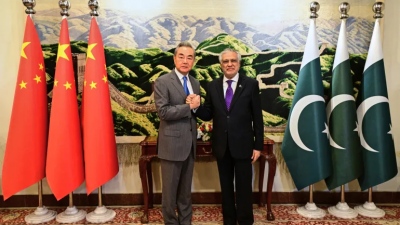
A New York Times columnist writes about the "Three Ts" emphasized by Beijing: tariffs, technology, and Taiwan. Xi is expected to insist on extending the trade truce and easing export restrictions on electronic components essential for modernizing the Chinese industrial sector. In exchange, he may offer significant investments. For instance, talks are underway with Boeing for a deal involving 500 737 Max aircraft and dozens of wide-body aircraft. This is considered beneficial for both sides, The Guardian points out. On the Taiwan issue, there also seems to be room for maneuver. Trump, unlike Joe Biden and Democrats in general, avoids provocations surrounding the island and has even advised US allies in Japan not to exacerbate the situation. However, Chinese Foreign Minister Wang Yi recently admitted that the Taiwan issue still constitutes "the greatest risk" in US-Chinese relations.
Can China help the US?
Trump’s contradictoriness has long been a subject of commentary. The same applies to his rhetoric toward China. The American president often combines confrontational statements with references to his "special relationship" with Xi, presenting China as one of the greatest threats while simultaneously calling for cooperation. For this reason, even analysts familiar with the White House avoid predicting how he will act in Beijing. Most observers agree that Trump will certainly raise the issue of the Strait of Hormuz and China’s ability to apply pressure on Iran. However, these efforts are unlikely to yield results.
Chinese analysts clarify that the issue is not just Beijing’s reluctance to help Washington. "China does not control Iran and possesses no powers regarding the crisis in the Strait of Hormuz," explained Professor Wang Wen from Renmin University. He added that Beijing considers the situation a crisis created by the US itself and one that, moreover, is far from China. Simultaneously, Trump repeatedly states that the US is "winning" in Iran. Therefore, he is unlikely to push Xi particularly hard to help him in the Middle East.
Americans turn their interest toward China
US officials speaking anonymously about the visit estimate that specific agreements are more likely on less controversial issues. These include the creation of a bilateral Chamber of Commerce and an investment council. Meanwhile, a "communication channel" is planned for the joint addressing of threats related to the development of artificial intelligence. Trump’s associates have repeatedly expressed concern over China's rapid progress in the AI sector. Such agreements, even if they lack immediate results, can contribute to the de-escalation of tension. And this is something Trump needs right now.
American citizens are now showing increased interest in foreign policy and specifically in China. According to data from the Pew Research Center, in 2023 more than 80% of Americans had a negative image of China. However, this percentage decreases every year. Consequently, Trump’s previously intense anti-Chinese rhetoric is becoming less and less politically advantageous—especially ahead of the congressional elections in November. For this reason, in Beijing, it would be useful for the American president to show restraint and avoid further escalation.
www.bankingnews.gr


Σχόλια αναγνωστών